




Détails du produit
3.3kW On-Board Charger for EV & Conversion Projects
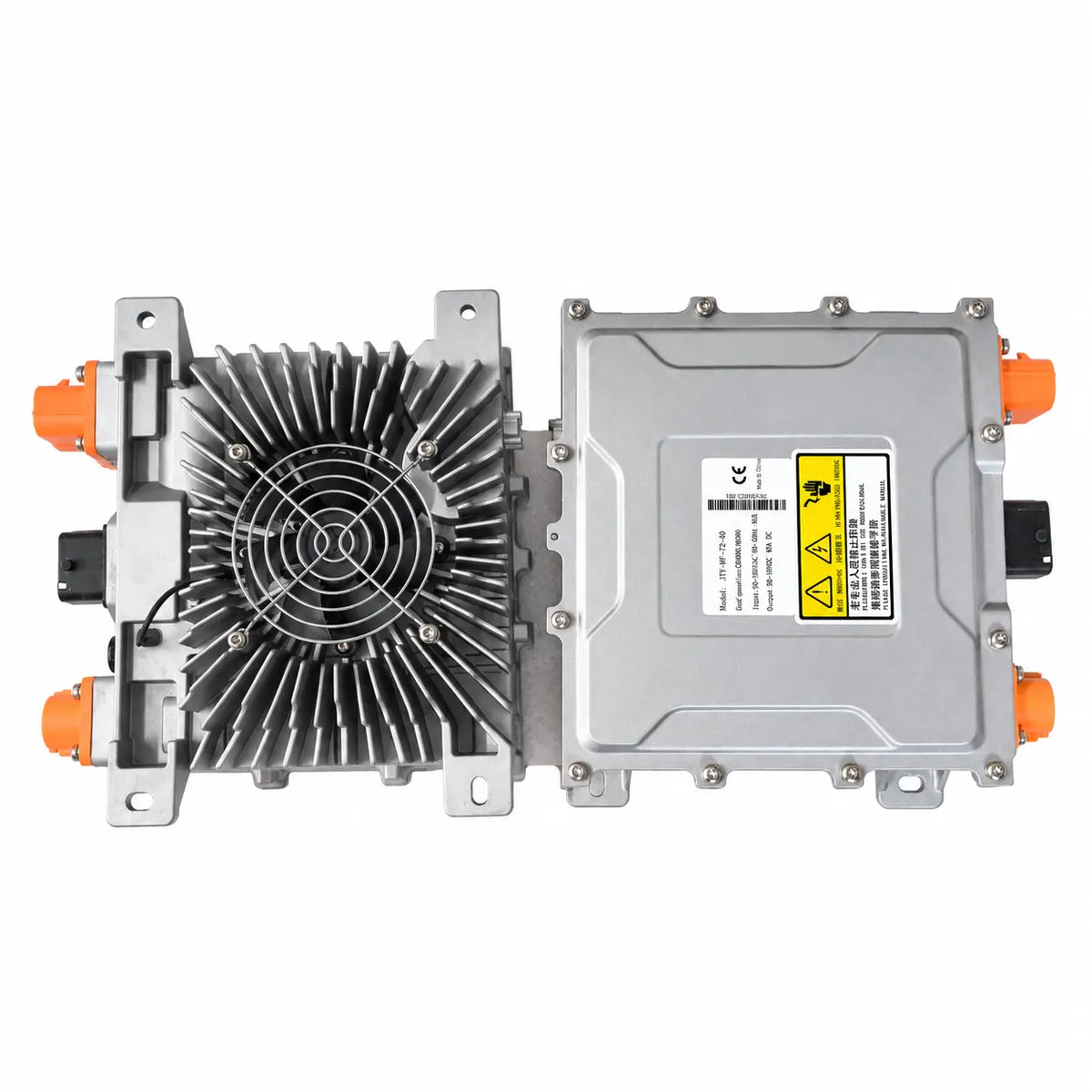
A compact, IP67-rated 3.3kW on-board charger designed for EV conversions, electric vehicles and custom battery systems.
Available for battery platforms from 48V to 540V, with CAN or Enable control. Before shipment, we configure the charger according to your battery voltage, chemistry and control requirements — helping avoid one of the most common OBC problems: receiving a charger that does not communicate correctly with the vehicle or BMS.
CAN or Enable — Choose the Control Method That Fits Your System
CAN Control is recommended when the BMS needs to actively manage charging. The BMS sends the permitted charging voltage and current to the OBC, while the charger reports its operating status back to the system.
The charger will communicate with Orion and ZEVA BMS by default. If you are unsure whether your BMS protocol is compatible, send us your CAN protocol and our engineers can check it before ordering. If your project requires a different or custom CAN protocol, please contact us for protocol matching and configuration support.
Enable Control is available for systems that do not require CAN communication. Charging parameters are configured according to your battery requirements.
Choose the Right Model for Your Battery
Selecting an OBC is not simply a matter of matching the nominal battery voltage.
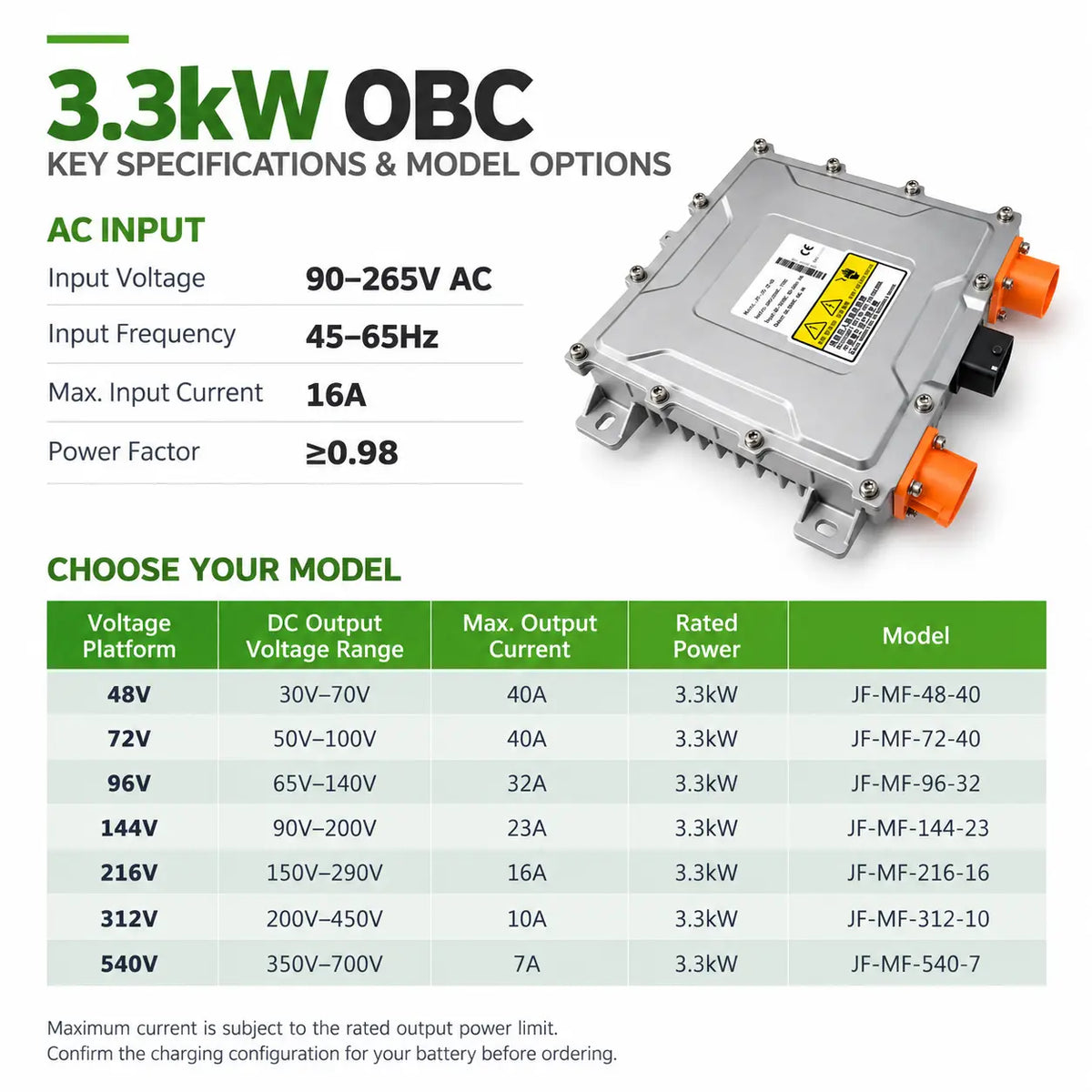
The charger's DC output voltage range must cover the required charging voltage of your battery, while the charging current, control method and communication settings must also match your battery and BMS.
| Voltage Platform | DC Output Voltage Range | Max. Output Current | Rated Power | Model |
|---|---|---|---|---|
| 48V | 30–70V | 40A | 2.5kW | JF-MF-48-40 |
| 72V | 50–100V | 40A | 3.3kW | JF-MF-72-40 |
| 96V | 65–140V | 32A | 3.3kW | JF-MF-96-32 |
| 144V | 90–200V | 23A | 3.3kW | JF-MF-144-23 |
| 216V | 150–290V | 16A | 3.3kW | JF-MF-216-16 |
| 312V | 200–450V | 10A | 3.3kW | JF-MF-312-10 |
| 540V | 350–700V | 7A | 3.3kW | JF-MF-540-7 |
Important: The 48V JF-MF-48-40 version is rated at 2.5kW. The other models listed above are rated at 3.3kW.
If you are not sure which voltage version is suitable, send us your battery chemistry, series configuration and maximum charging voltage before ordering.
What’s Included
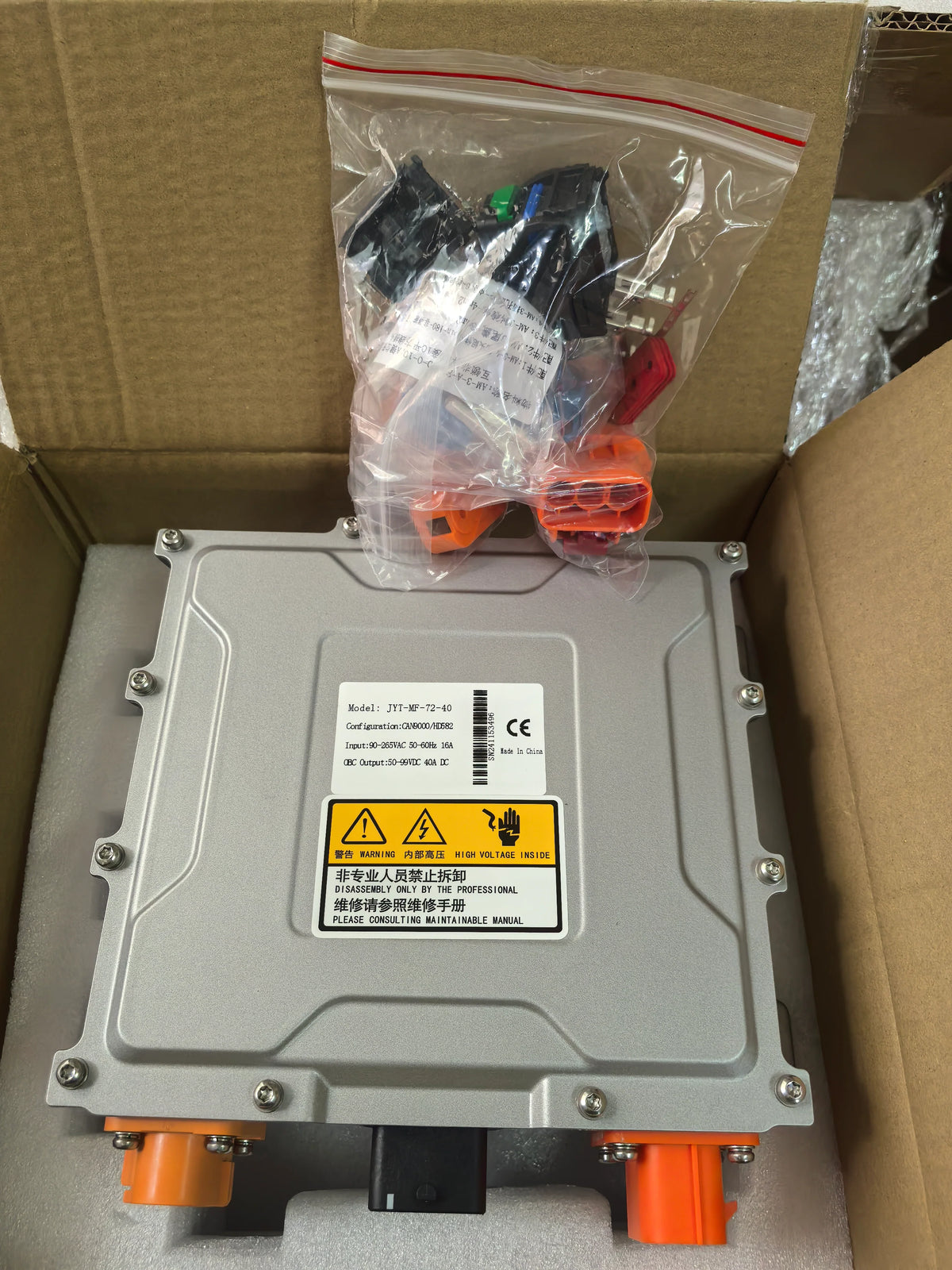
Matching connector sockets are included. Cables and AC/DC plugs are not supplied as standard. If you need a custom wiring harness or specific plug configuration, please contact us before ordering.

Two Important Point When Choosing Your Charger
1. 3.3kW output is rated at 220V AC input. At 110V AC, maximum output power is approximately 1.6kW.
If your vehicle will normally charge from a 110–120V supply, please consider this when estimating charging time.
2. Optional CC / CP Function
CC connection confirmation and CP signal detection are available for projects that require integration with a vehicle AC charging interface.
CC/CP is not included in the standard configuration and must be specified before ordering. Please contact us if your project requires this function.
Before You Order
Please send us the following information so we can confirm the correct charger configuration:
-
Battery chemistry: Li-ion or LiFePO4
2. Number of cells in series: e.g. 24S, 32S
3. Maximum charging voltage:
4. Control method: CAN or Enable
5. BMS / CAN information: Orion, ZEVA or other BMS
6. CAN protocol & baud rate: if CAN Control is selected
Key Features
- Up to 3.3kW charging power
- 90–265VAC wide AC input range
- Multiple battery platforms from 48V to 540V
- CAN Control or Enable Control available
- Existing CAN configurations for Orion and ZEVA BMS
- Custom CAN protocol matching available
- IP67 protection
- Forced-air cooling
- Full-load conversion efficiency >93%
- Soft-start design with no inrush current
- Multiple electrical, thermal and communication protections
- Designed for vehicle-mounted applications
IP67 — What It Means in a Vehicle
An OBC is not always installed in a clean, dry location.
Depending on the vehicle, it may be exposed to dust, moisture, road spray or water during washing. An IP67 enclosure helps keep these contaminants away from the internal electronics.
For the installer, this means more flexibility when choosing the mounting location — but IP67 does not mean the charger can be installed anywhere without considering drainage, airflow and connector sealing.
Suitable Applications
The 3.3kW OBC can be considered for applications such as:
- Electric vehicles
- Classic car EV conversions
- Custom EV projects
- Electric utility vehicles
- Lithium battery-powered vehicles
- Battery pack integration projects
- Vehicle systems using Orion or ZEVA BMS
- Custom CAN-controlled charging systems
Shipping: Ships from China by express air. Estimated Delivery Time: 7–10 days. Import duties and taxes are not included.
Warranty: 1-Year Limited Warranty
QUESTIONS ET RÉPONSES